The South China Sea dispute has seen a flurry of developments in recent days, from localised standoffs over grounded vessels to reports of new military facilities, international sanctions and renewed diplomatic and commercial proposals. Manila and Beijing remain at odds over maritime features and resource access, while neighbours and external actors press for negotiated rules such as a Code of Conduct even as analysts and officials debate whether cooperation on energy projects or defence modernisation can reduce the risk of confrontation.
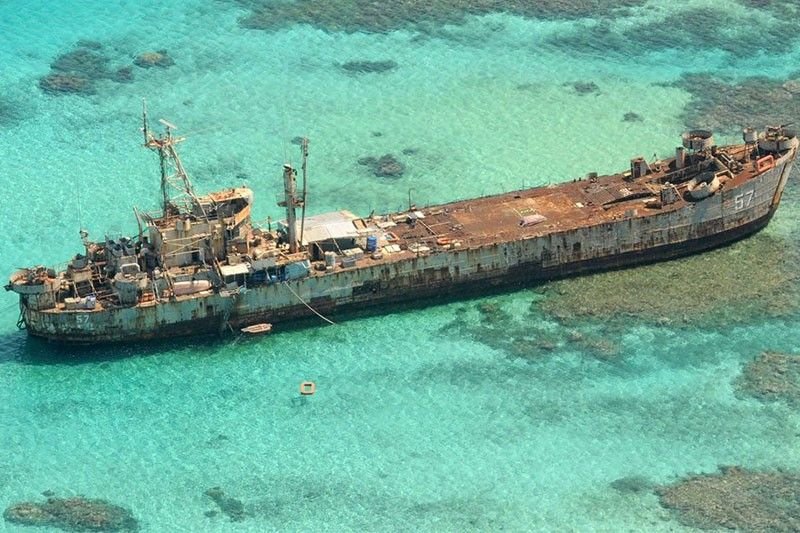
Tensions rise over Ayungin Shoal (Ren’ai Jiao) and a grounded Philippine vessel
Reports indicate growing tensions between the Philippines and China over Ayungin Shoal (also called Ren’ai Jiao), where a Philippine supply or service vessel has been described by Chinese authorities as an ‘‘unlawfully grounded’’ craft. Manila and Beijing remain in dispute over activity around the feature; Chinese officials have urged the Philippines to remove the grounded vessel, framing the presence as unlawful and contributing to rising diplomatic friction.
Sources: Tensions rising between Philippines, China over Ayungin Shoal in South China Sea China urges Philippines to remove unlawfully ‘grounded’ vessel from Ren’ai Jiao
Calls to use joint oil and gas projects to defuse tensions
Analysts and commentators have proposed that resuming joint oil and gas exploration and development could offer a practical pathway to ease frictions between Beijing and Manila. Commentaries are debating whether cooperative energy projects might build trust and create mutual interests that reduce the likelihood of standoffs, while analysts publicly urged both sides to consider resuming collaborative exploration as a confidence-building measure.
Sources: Could joint oil and gas projects ease Beijing‑Manila South China Sea tensions? Analysts urge China and the Philippines to resume joint oil and gas exploration
Vietnam protests reported Chinese construction in the Paracel (Xisha) islands
Vietnam formally demanded a halt to reported activity in the Paracel Islands after media accounts and satellite reporting suggested construction by Chinese authorities. Multiple outlets covered Hanoi’s objection and call for an end to the activity, while Chinese state commentary defended construction in the Xisha Qundao (Paracels) as legitimate and reasonable, framing the matter as within China’s rights.
Sources: Vietnam demands end to activity in Paracels after report of Chinese construction South China Sea row: Vietnam opposes Chinese construction in disputed Paracel islands Xinhua commentary: China’s construction in Xisha Qundao legitimate, reasonable
Reports of new Chinese military facilities and increased patrols
Multiple reports indicate Beijing has constructed or is preparing to militarise facilities in the South China Sea. Coverage ranges from accounts of a newly built military facility to analyses describing the planned militarisation of a previously pristine reef. Chinese authorities said patrols in the area have been enhanced in response to what they described as ‘‘illegal activities,’’ reflecting Beijing’s stated justification for an expanded presence.
Sources: Beijing builds new military facility in South China Sea China set to militarize once pristine South China Sea reef China says patrols enhanced over claimed ‘illegal activities’
Concerns over Scarborough Shoal and wider claims
Security commentators and former military personnel have warned that China may be laying groundwork for expanded control over maritime features, including Scarborough Shoal; one former US officer was reported to have suggested China could seek further claims that would affect outlying Philippine areas such as Batanes. Those assessments add to unease in Manila over incremental moves that might alter control of disputed features.
Sources: China laying groundwork for Scarborough Shoal takeover, possible Batanes claim — ex‑US officer
Code of Conduct negotiations and domestic debate in the Philippines
ASEAN officials expressed expectation that negotiations on a South China Sea Code of Conduct (COC) could conclude within the year, a development that would seek to establish rules for behaviour in disputed waters. Domestically, some figures cautioned that signing a COC could have risks; a former Philippine justice warned that certain outcomes could be interpreted as validating encroachment. Commentators have also examined provisional understandings and potential misunderstandings concerning the West Philippine Sea.
Sources: ASEAN chief expects conclusion of South China Sea COC negotiations this year Carpio: Signing CoC will validate encroachment Analysis: Provisional [mis]understanding on the West Philippine Sea
Philippine defence modernisation: drones and asymmetric capabilities
In response to rising tensions, Manila plans to expand its military drone fleet and pursue a ‘‘system of systems’’ approach to boost asymmetric defence capabilities. Reports describe acquisitions and integration of drone assets alongside other platforms as part of efforts to offset a larger maritime presence by other regional powers.
Sources: Philippines to expand military drone fleet as South China Sea tensions rise Philippines eyes drones and ‘system of systems’ to boost asymmetric defence
Domestic political debate: probe called into alleged Filipino complicity in reclamation
Senator calls have been made for an investigation into alleged Filipino involvement or complicity in Chinese reclamation activities in the West Philippine Sea. The appeal seeks clarity on any domestic interactions that may have facilitated external reclamation work, reflecting public and parliamentary concern about sovereignty and resource rights.
Sources: Filipinos complicit in China’s West PH Sea reclamation? Hontiveros urges probe
US sanctions on China National Offshore Oil Corporation (CNOOC) and industry context
The United States has imposed sanctions on China National Offshore Oil Corporation (CNOOC) over activities tied to the South China Sea, signaling targeted economic measures against a major Chinese energy firm. Separately, industry reporting noted that CNOOC announced multiple offshore discoveries and appraisal successes in the first half of the year, underscoring its active exploration programme even as it faces sanctions.
Sources: US imposes sanctions on China’s CNOOC oil company over South China Sea CNOOC reports four offshore discoveries, 16 successful appraisals in first half
Manila’s policy shift and bilateral tensions
Commentators have described a policy “reset” in Manila’s approach to Beijing, while others argue that Chinese diplomatic pressure has at times backfired. Coverage also touched on operational episodes — including Philippine and US personnel assessing a Chinese‑linked steel plant in Mindanao as part of planning for a future naval facility and joint exercises — which drew protest from Beijing and fed discussion about the balance between engagement and deterrence.
Sources: Manila’s China “Reset” Has Officially Begun China’s Blackmail Diplomacy against the Philippines Unravels Why Philippine, US forces tried to ‘scope’ a Chinese‑linked steel plant in Mindanao
Officials and public messaging: West Philippine Sea as a resources fight
Defence Secretary Teodoro addressed youth audiences urging them to see the West Philippine Sea dispute as a contest over future resources for the next generation, framing the issue in terms of long‑term national interest.
Sources: Teodoro urges youth to view West Philippine Sea as fight for future resources
Incidents, research and other coverage
Beyond diplomacy and defence, the region also featured diverse reporting: scientists filmed walking behaviour of deep‑sea peristediid fishes in the South China Sea, and a Malaysian commando recounted surviving 15 hours adrift after a parachute training jump—events that underscore the variety of human and scientific activity in the waters at the centre of geopolitical contestation. Separately, a sensational report circulated claiming a US submarine struck an underwater mountain; such claims attracted attention but remain distinct from the dispute’s diplomatic and military reporting.
Sources: Walking Behaviour in Peristediid Fishes in the South China Sea (VIDEO) Researchers film deep‑sea armored searobin walking sideways and backward Malaysian commando adrift for 15 hours after training accident Sensational claim: US Seawolf‑class submarine incident
Collectively, the recent reports depict a multifaceted environment in the South China Sea — combining diplomatic initiatives, resource and commercial considerations, military preparations, and incidents at sea — with stakeholders pursuing a mix of engagement, deterrence and legal and political remedies.