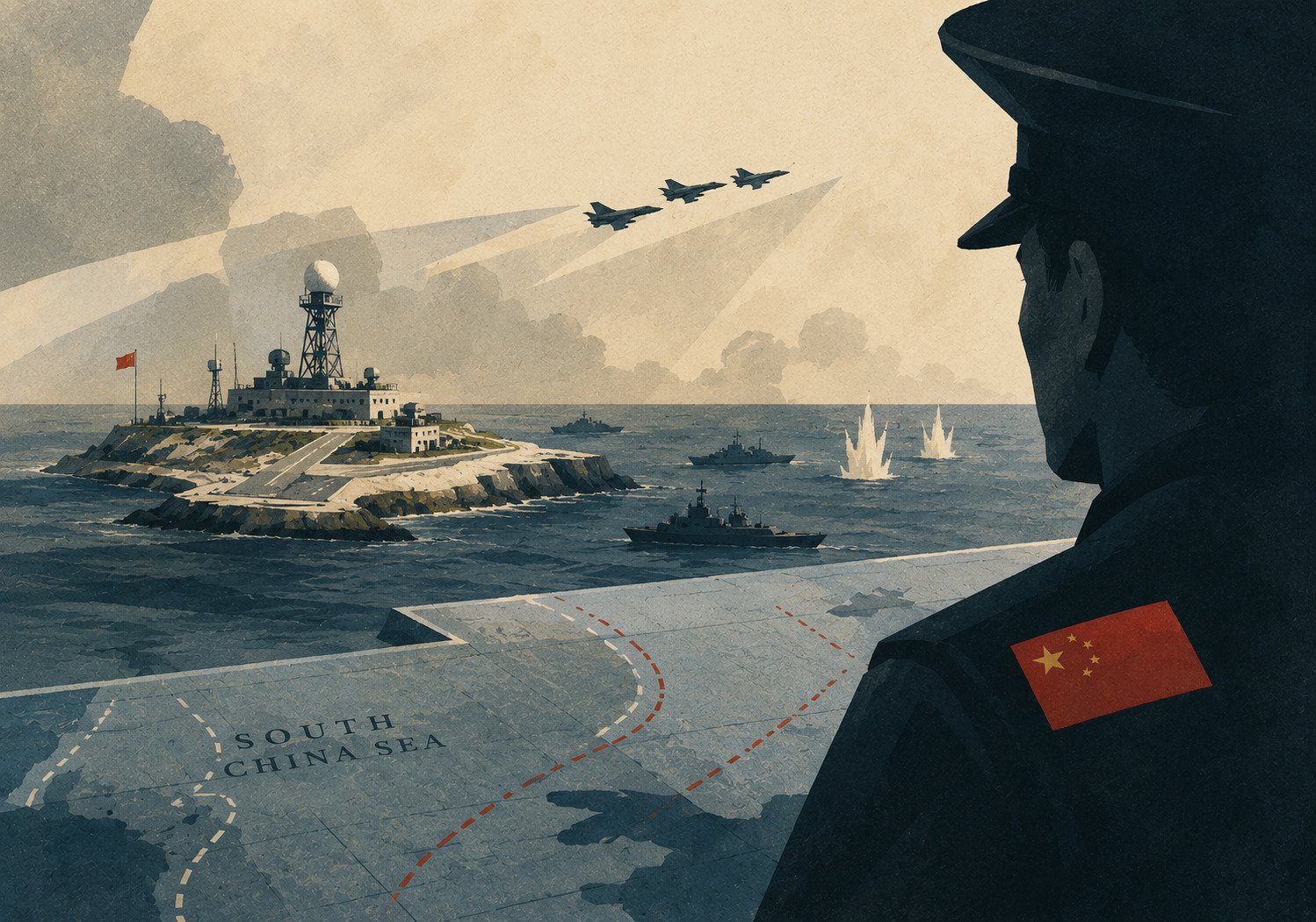
The South China Sea standoff intensified this week as Chinese forces tracked and warned Philippine aircraft near Scarborough Shoal, Beijing staged live‑fire drills, and analysts flagged expanding island construction and proposals for AI‑driven defensive installations. Manila pushed back publicly against Chinese narratives over the grounded BRP Sierra Madre at Ayungin Shoal even as regional diplomacy pressed for a Code of Conduct and the United States continued naval and coast guard operations in the area. The developments underscore growing military and political activity around contested features and the competing domestic and international responses they are prompting.
AFP rebukes Chinese narrative over Ayungin Shoal and BRP Sierra Madre
The Armed Forces of the Philippines publicly rejected statements by the Chinese Embassy in Manila, accusing Beijing of attempting to “rewrite history” concerning the presence of the grounded BRP Sierra Madre at Ayungin Shoal. The AFP’s rebuttal followed an increasingly visible dispute over what has been described in media reporting as an “Ayungin arrangement,” with local outlets compiling government statements and background on the matter. Calls for clearer Philippine government messaging also surfaced domestically, with commentators urging national institutions to counter Chinese propaganda related to the West Philippine Sea.
Sources: AFP rejects China’s ‘deceptive’ narratives on Ayungin Shoal, BRP Sierra Madre | AFP hits Chinese Embassy for ‘deceptive narratives’ on Ayungin Shoal (Manila Bulletin) | He said, she said, Marcos said: What we know about Ayungin ‘arrangement’ (Rappler)
PLA tracks and warns Philippine aircraft over Scarborough (Huangyan Dao)
Chinese military authorities said they tracked, monitored and issued warnings to three Philippine aircraft they described as having entered airspace over Huangyan Dao (Scarborough Shoal). State and state‑linked outlets reported that the PLA Southern Theater Command maintained full tracking and surveillance as Manila involved external partners in organizing patrols in the wider South China Sea. Chinese coverage characterized the flights as illegal intrusions and said the military had warned the aircraft off.
Sources: Exclusive: PLA keeps full tracking, surveillance as Philippines draws in external forces (Global Times) | PLA warns off Philippine planes over Huangyan (China Daily) | China Says Philippine Aircraft ‘Intruded Into’ Airspace Over Scarborough Shoal
China stages live‑fire drills in the South China Sea
Chinese forces conducted live‑fire drills in the South China Sea in an operation described in reporting as heightening the standoff with Manila. Coverage noted the drills amid the broader pattern of Chinese military activity and surveillance in disputed waters.
Sources: China stages live‑fire drills in South China Sea, heightening Manila standoff (CHOSUNBIZ)
China expands island construction and observation capacity; concerns about militarization
Reporting identified a large new artificial island emerging in the South China Sea that analysts say is primed for militarization. Coverage tied this development to longer‑term island creation efforts and noted other Chinese moves such as a new marine observation station and accelerated militarization on features including the Paracel Islands. Observers and outlets raised questions about strategic intent as infrastructure and monitoring networks expand.
Sources: China’s Massive New Artificial Island In The South China Sea Emerges (TWZ) | China builds 1,500‑acre sea fortress: Is Xi preparing new launchpad for Taiwan? (Hindustan Times) | China Rushes to Complete Paracel Island Militarization (The Maritime Executive) | China’s new marine observation station expands reef network (Asia News Network)
Beijing proposals: AI ‘robot fortresses’ and automated defensive sites
Analysts reported proposals for AI‑driven defensive installations or so‑called “robotic fortresses” on South China Sea isles, including concept pieces and coverage that Chinese coast guard planners had proposed automating or converting features into more autonomous defensive sites. Commentary framed the proposals as potentially transformative for regional operations, while regional outlets described them as part of a suite of proposals for expanded automation and surveillance.
Sources: China’s AI ‘Robotic Fortresses’ Could Transform South China Sea Warfare (Defence Security Asia) | Chinese coastguard proposes turning South China Sea isles into robotic fortress (The Star)
US naval and coast guard operations: destroyer blackout and Midgett flight ops
A US Navy Arleigh Burke‑class destroyer, USS Benfold, suffered a reported four‑day power blackout while operating in the South China Sea; coverage described the incident as exposing operational risks and noted onboard hardships during the outage. The event was reported amid broader concerns about fleet readiness. Separately, the US Coast Guard cutter USCGC Midgett released imagery showing night flight operations in the South China Sea, underscoring continued US maritime and airborne activity in the area.
Sources: US Navy destroyer USS Benfold suffers four‑day power blackout (news report) | Navy destroyer went days without power, leaving sailors without toilets (WATE) | USCGC Midgett conducts night flight operations in the South China Sea (DVIDS images)
Diplomacy: China and Indonesia urge finalization of Code of Conduct
China and Indonesia urged the finalization of a South China Sea Code of Conduct during ministerial talks that also covered investment and economic cooperation. Coverage described the meetings as part of efforts to deepen bilateral ties while addressing regional maritime security, with investment, nickel‑sector links and broader cooperation discussed alongside the push for a formalized code.
Sources: Indonesia, China urge finalization of South China Sea Code of Conduct (ANTARA) | China‑Indonesia talks put investment and nickel ties in focus (Indonesia Business Post)
Philippine domestic responses: education, messaging and calls for tougher posture
In Manila, commentators and analysts urged stronger state action to counter Chinese information campaigns, with calls for the National Security Council to intensify efforts against propaganda related to the West Philippine Sea. Separately, reporting highlighted Philippine initiatives to use classrooms and public education to reinforce national claims in the South China Sea. Opinion pieces in regional outlets advocated for a firmer, zero‑tolerance posture toward Chinese actions in contested waters.
Sources: West PH Sea: NSC urged to step up efforts vs. Chinese propaganda (Inquirer.net) | Philippines Bets on Classrooms to Strengthen South China Sea Claims (NewsGram) | Zero‑tolerance posture against China is needed in ‘West Philippine’ Sea (Nikkei Asia)
Explainer and wider strategic context
Fact‑checking coverage addressed naming and legal issues, noting that claims of an international recognition or separate legal basis for the term “West Philippine Sea” versus “South China Sea” are false in the way they were framed in some public discussions. Broader analyses examined why Taiwan and the South China Sea matter to US and global interests, situating recent military and diplomatic activity within strategic debates about regional security.
Sources: FALSE: There’s no int’l recognition, legal basis on ‘West PH Sea’ vs ‘South China Sea’ rift (Explained PH) | Why Taiwan and the South China Sea matter to the US and the world (PressReader)
Conclusion
The week’s reports depict a region marked by intensified Chinese military activity and proposals for new defensive capabilities, sustained Philippine efforts to assert sovereignty and counter information narratives, ongoing US maritime operations, and parallel diplomatic moves to codify conduct in contested waters. Together, the developments reflect a mix of operational incidents, strategic infrastructure expansion, and diplomatic engagement that will continue to shape maritime tensions in the South China Sea.